Akoya: Shape
Akoya pearls are bead-nucleated and are most closely associated with round and near-round shapes. In the classic akoya market, roundness is one of the most important visual expectations, especially for strands, studs, and matched sets.
Round, Near-Round, and Off-Round
Round akoya pearls appear spherical when viewed from different angles. Near-round pearls show slight deviation from perfect roundness, but still appear round to the casual observer, especially when worn.
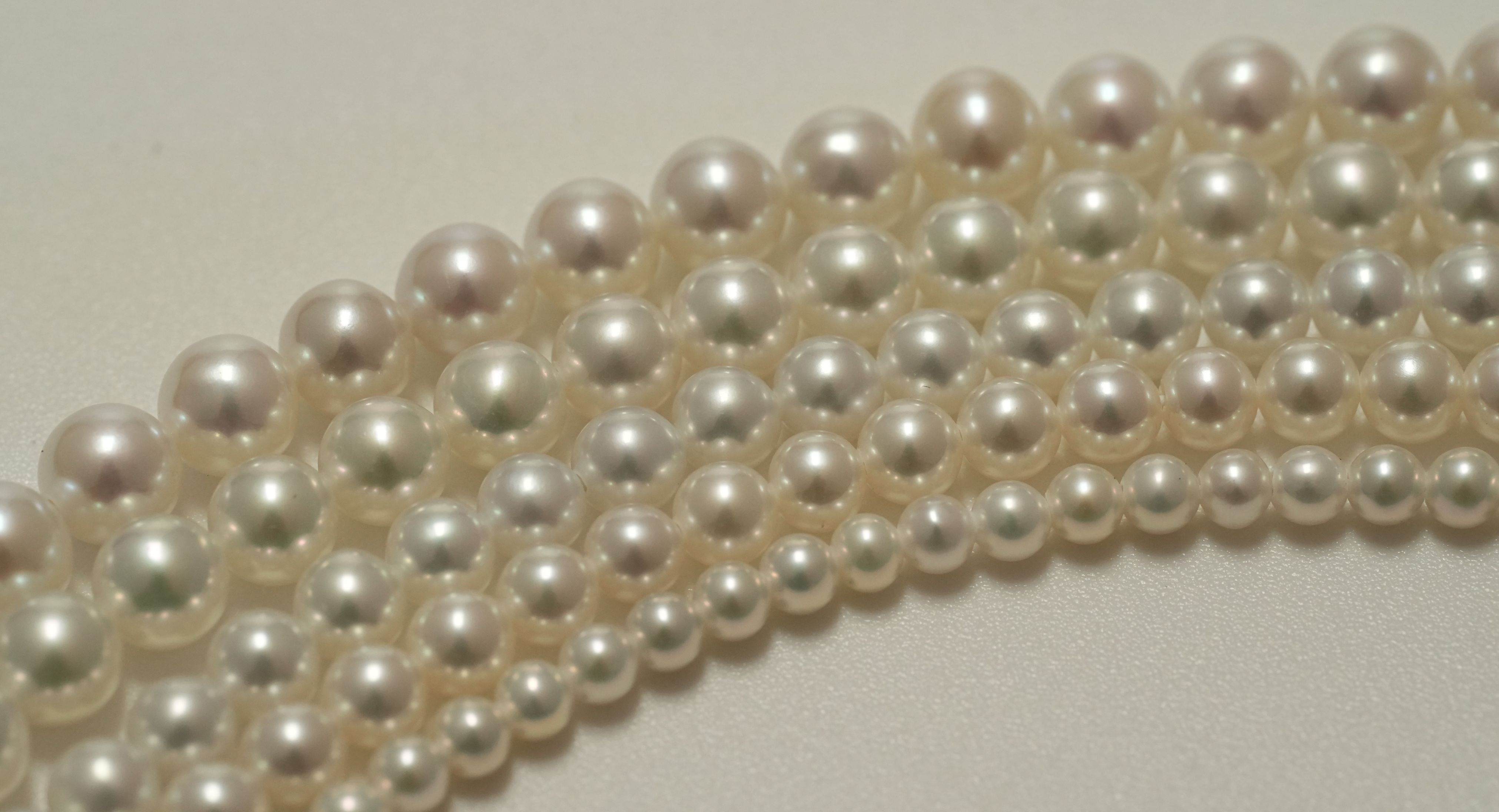
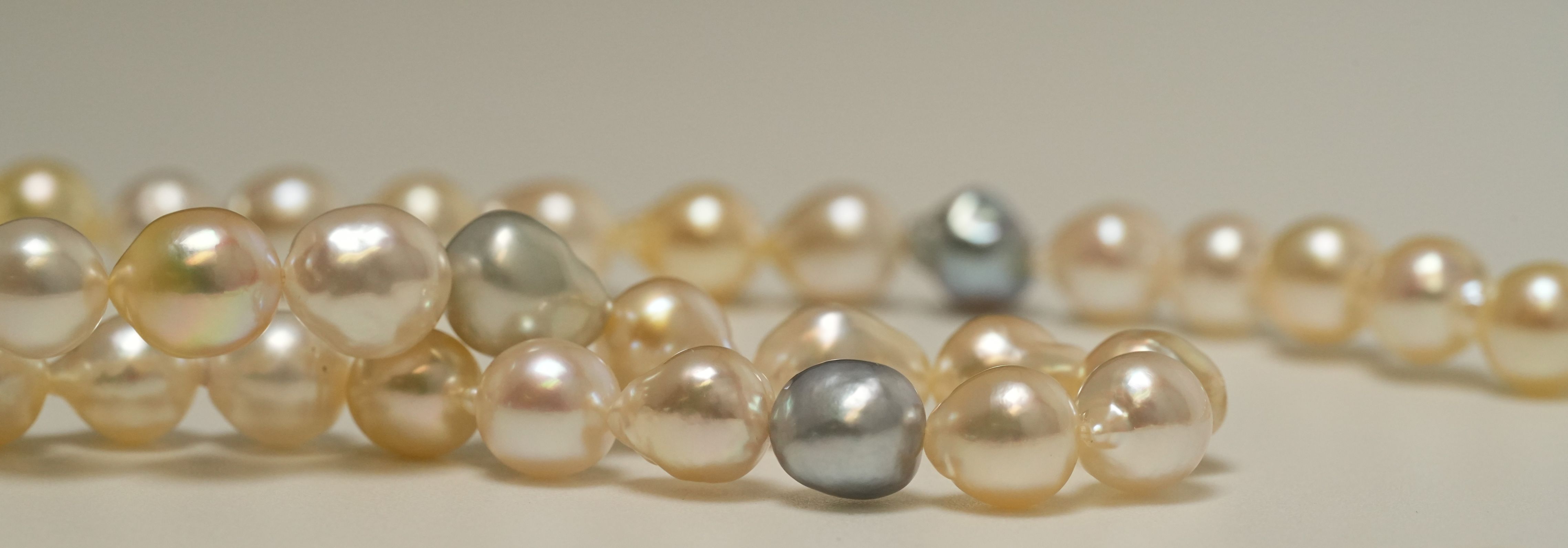
Off-round akoya pearls show more noticeable shape variation. They may appear slightly oval, egg-shaped, or softly drop-like, but these shapes are usually treated as variations within off-round akoya rather than as separate commercial categories. They are most often seen mixed within strands, where the overall matching and visual balance of the strand are more important than naming each individual shape.
A full strand intentionally matched from clearly oval or drop-shaped akoya pearls is uncommon. When akoya pearls are described as drops, they are often closer to baroque or semi-baroque shapes than to the symmetrical drops commonly associated with other pearl types
Baroque Akoya Pearls
Baroque akoya pearls have irregular or free-form shapes. While round akoya pearls dominate the classic market, baroque akoya pearls can be desirable when they have strong luster, attractive color, and appealing organic form. Natural-color baroque akoya pearls, especially silver-blue or blues, can have a distinct market identity separate from classic round white akoya pearls.
Akoya Keshi
Akoya keshi are non-bead cultured pearls that form as a byproduct of the culturing process. They are typically small, irregular, and highly lustrous. They are valued for their distinctive shapes, strong surface brilliance, and unusual character.
When evaluating akoya pearl shape, roundness is important, but it should not be judged alone. A pearl’s value also depends on luster, surface quality, nacre quality, color, size, and matching. A slightly off-round pearl with excellent luster and clean surface may be more attractive than a round pearl with weak luster or poor nacre quality.
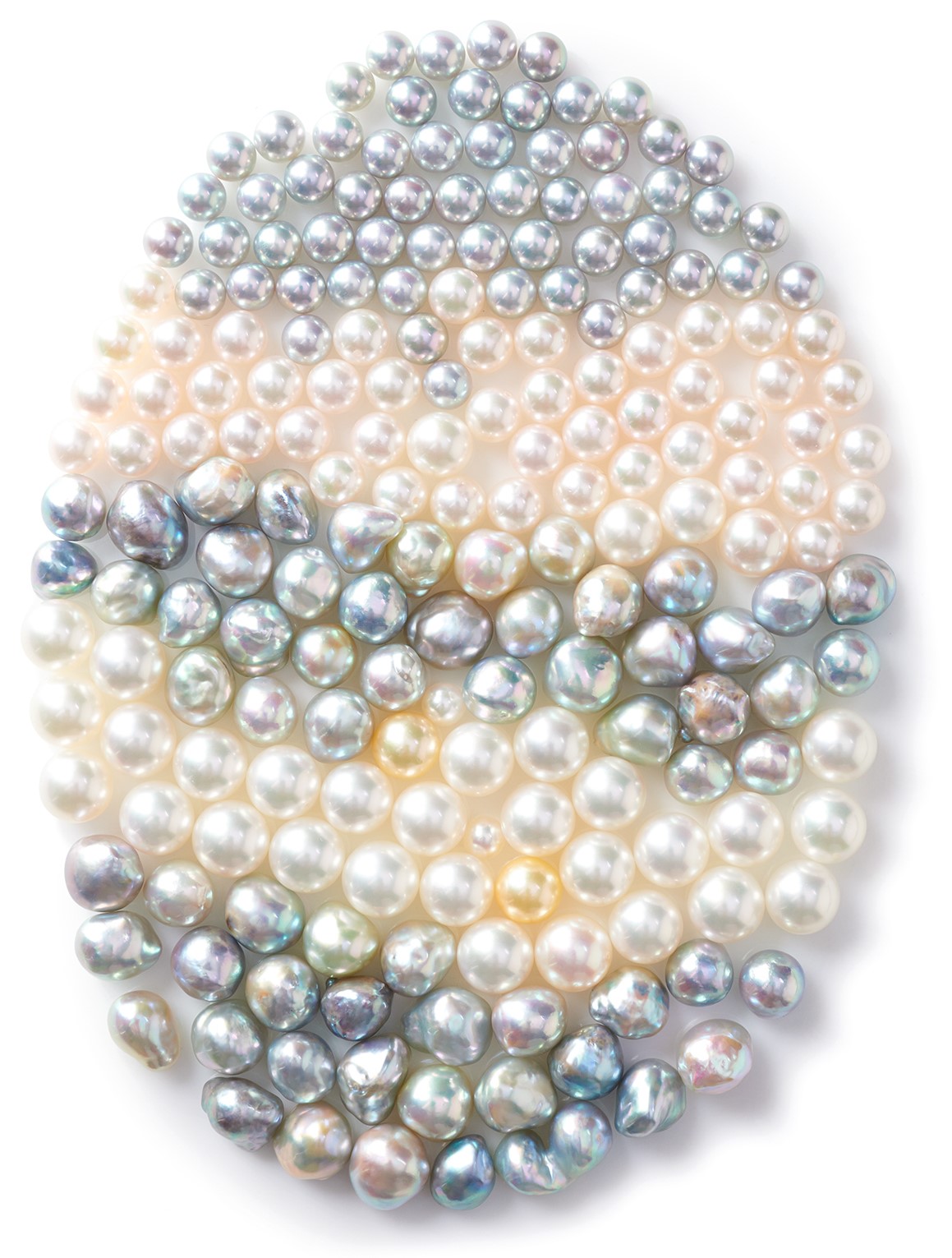
Photo credit Ted Morrison (2019) and used with permission.
19 comments