Donor Mussel Pigmentation and Selective Breeding
Freshwater pearl farming in China evolved steadily over time. As production matured, farmers began paying closer attention to the donor mussel, not just the host.
Selective breeding programs were developed to emphasize and enhance specific mantle characteristics, including pigmentation. The inner shell color of a mussel reflects the biological activity of the mantle tissue that produces nacre. Strong purple inner shell tones indicate active pigment expression within that tissue.
When mantle tissue from these donors is used in grafting, pigment characteristics can influence the body color and overtone of the resulting pearls. While luster and orient are structural properties of nacre, determined by the arrangement of aragonite platelets, pigmentation is the primary contributor to overall color expression.
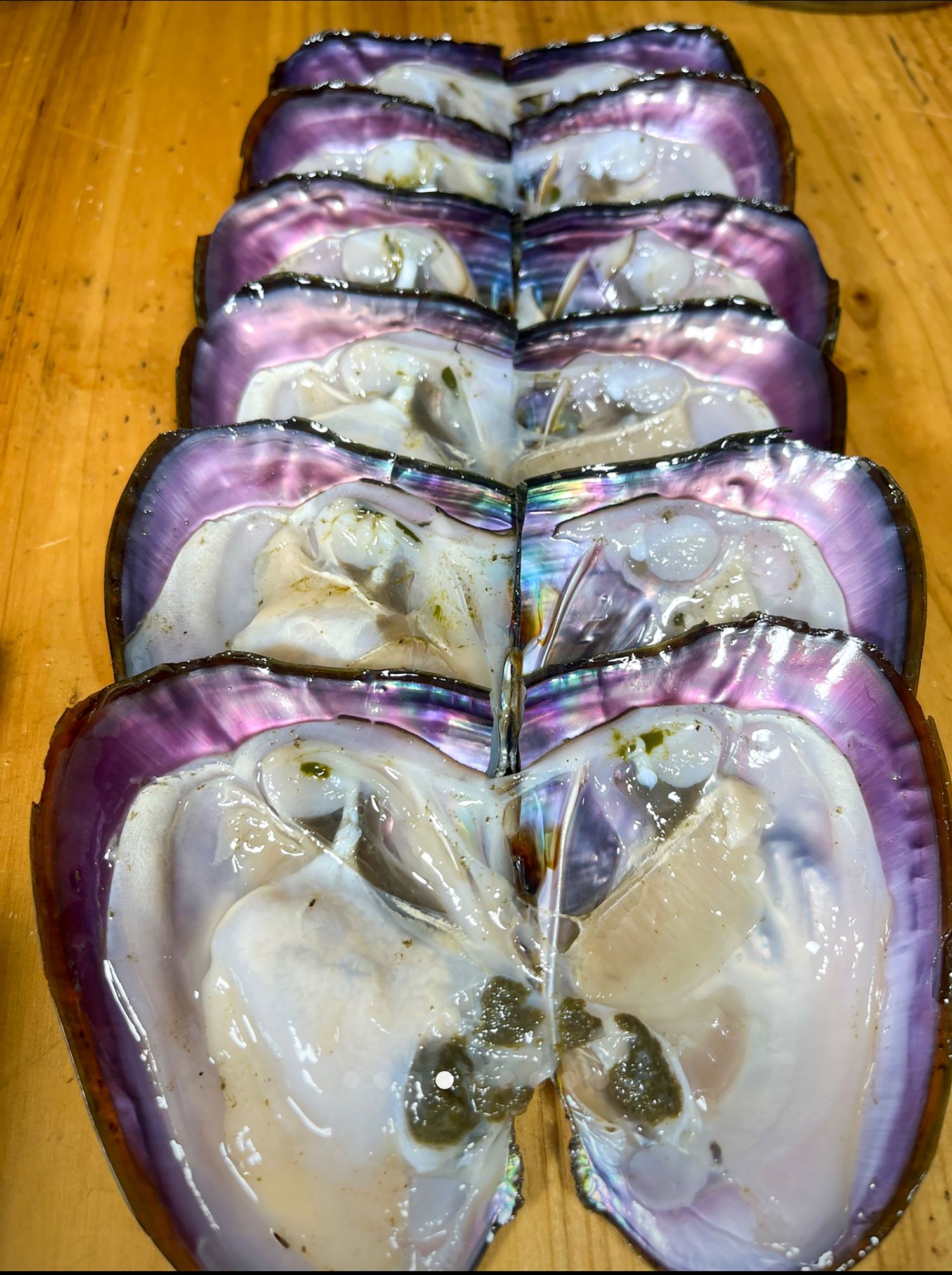
Freshwater mussels displaying purple inner shell coloration associated with mantle pigment expression.
The image above shows selectively bred freshwater mussels exhibiting intense purple inner shell coloration. This visible coloration reflects intentional genetic selection of donor mantle traits.
Over time, this focus on donor genetics expanded beyond just overtone expression and moved toward more control of base color itself.
Modern Donor Mussel Developments
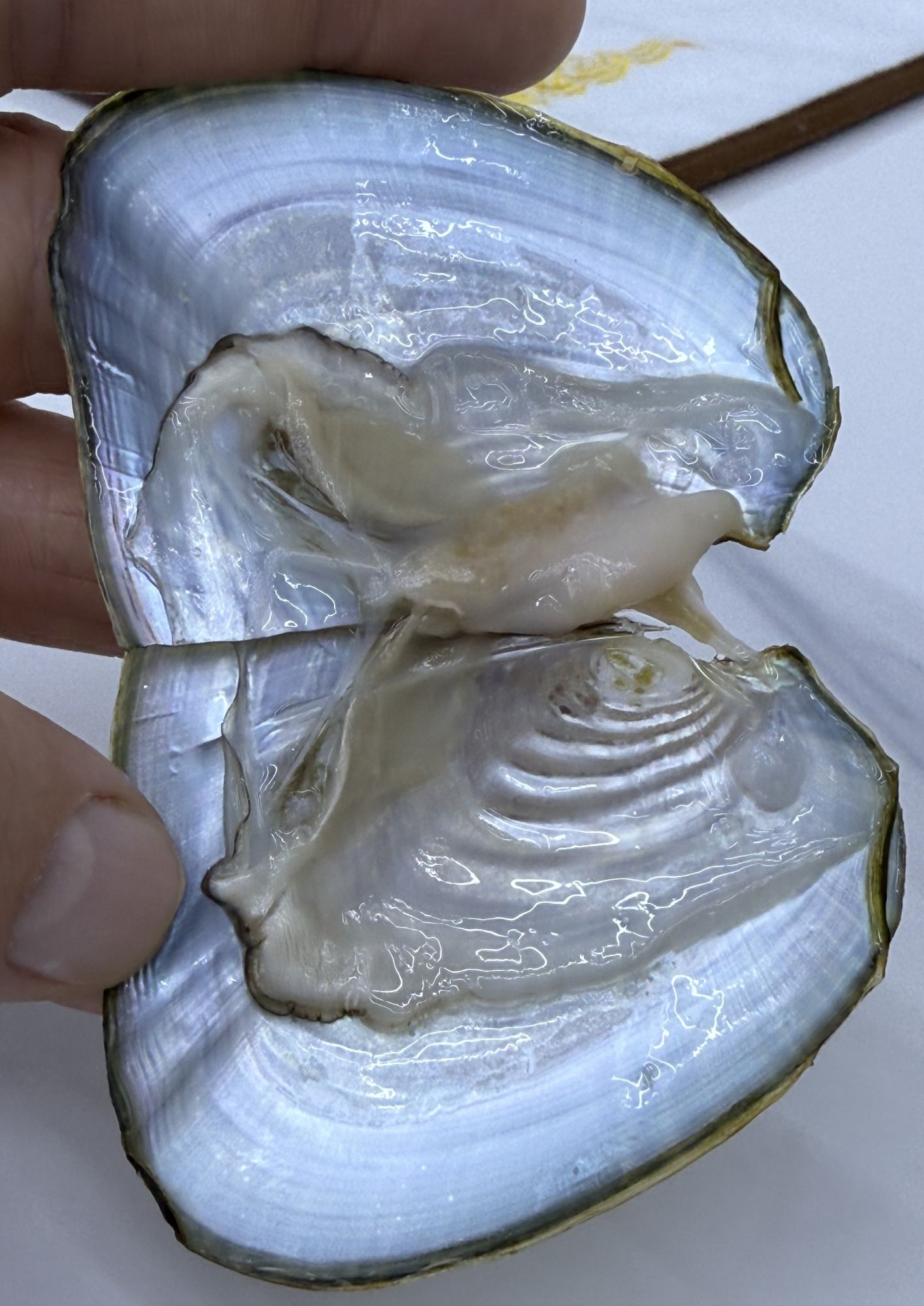
In 2024, Chinese producers introduced newly developed hybrid donor mussels selected specifically for very white, translucent mantle tissue. This work shifted emphasis from the host mussel to donor tissue genetics.
When mantle tissue from these young hybrid donors is used, the nacre deposited during growth is naturally pale and translucent. White freshwater pearls can be grown without relying on traditional bleaching after harvest.
This development reflects a broader direction in modern freshwater perliculture. Outcomes are increasingly determined by genetics and donor tissue characteristics rather than grafting technique alone.
413 comments