Pearl Farms in Japan
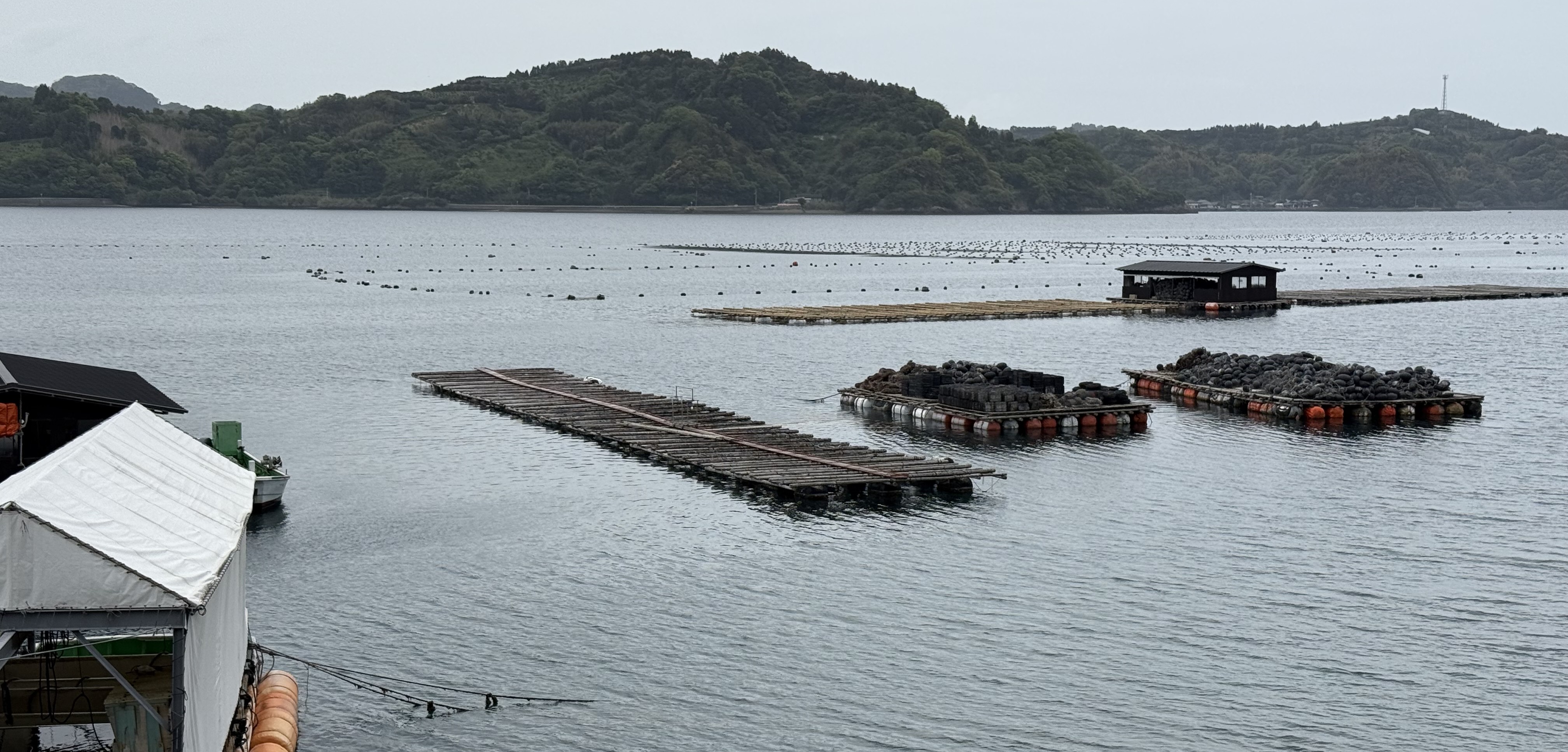
Akoya Pearl Farm in Uwajima, Japan

Overlooking akoya pearl farm in Uwajima, Japan

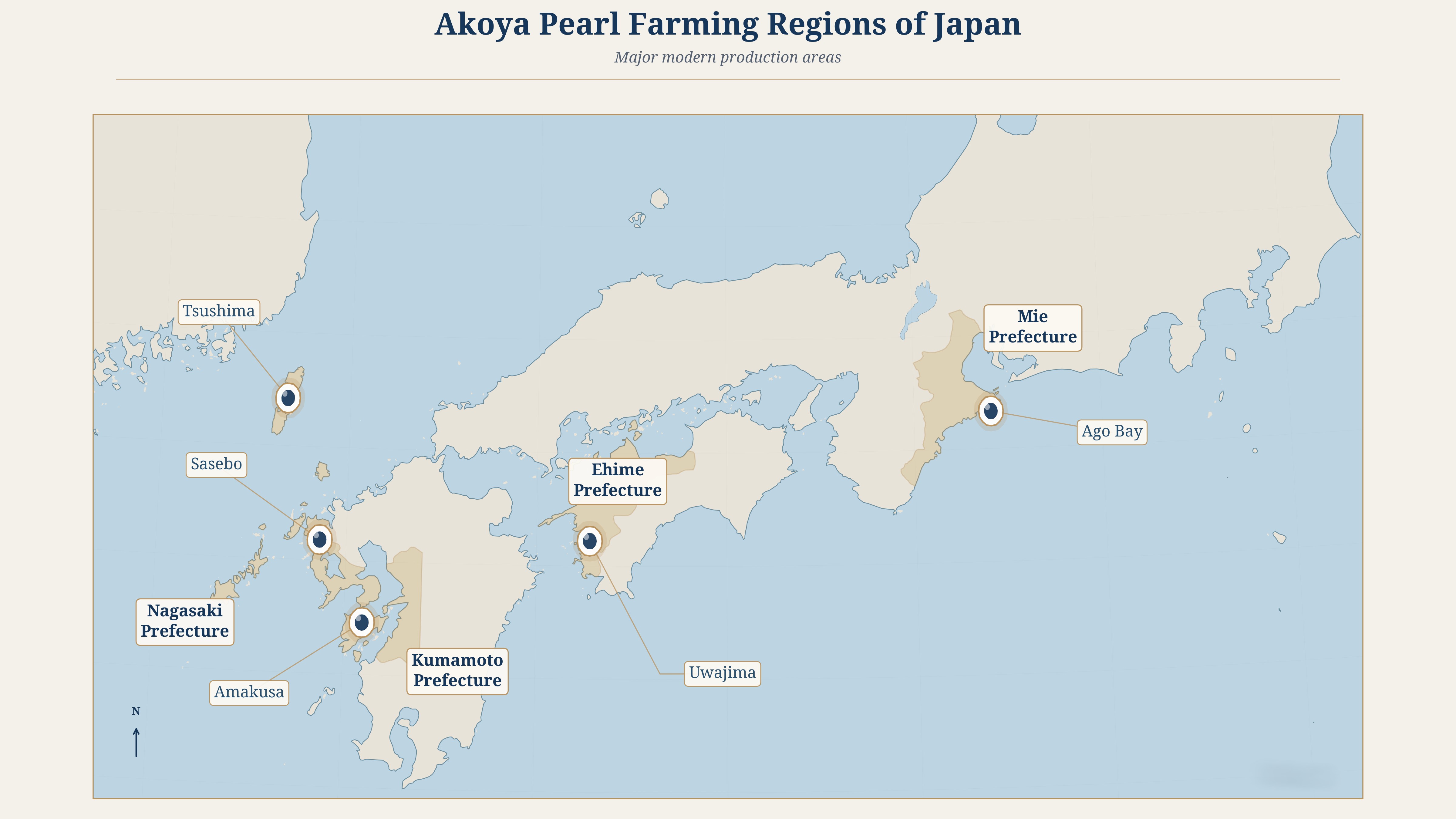
Akoya pearl farms are found throughout the southern coastline of Japan, particularly in Mie Prefecture, Ehime Prefecture around Uwajima, Nagasaki Prefecture including areas such as Sasebo and Tsushima, and parts of Kumamoto and other protected bays of Kyushu. The industry remains centered around calm inlets and sheltered coastal waters with stable salinity and access to nutrient-rich currents.
Farm Structure and Bay Management

Most farms are family-operated businesses passed down through multiple generations. Many present-day farmers are descendants of families that entered the industry during the early expansion of akoya pearl cultivation in the first half of the twentieth century.

Akoya pearl mollusks are typically held in baskets or panel nets suspended from floating rafts, longlines, or buoy-supported systems, depending on the farm and location. The protected bays used for farming are carefully selected. Freshwater runoff from nearby rivers and estuaries helps support plankton growth, which provides food for the mollusks. At the same time, excessive freshwater from heavy rain or typhoons can lower salinity to dangerous levels, forcing farmers to move shells into deeper water.

Environmental Pressures

Environmental conditions play a major role in the success or failure of a harvest. Red tide events, known in Japan as akashio, remain one of the industry’s greatest threats. These harmful algae blooms can rapidly deplete oxygen levels and lead to catastrophic shell mortality. Typhoons, warming waters, disease outbreaks, and seasonal environmental instability also pose constant risks to production.

A Smaller, Quality-Focused Industry

Modern akoya pearl farming in Japan is significantly smaller than it was at its peak. Production has declined sharply over the past several decades due to environmental pressures, shell mortality, rising operating costs, competition from other pearl categories, and an aging farming population. Many farms that once operated throughout Japan have disappeared, and younger generations are increasingly reluctant to enter the industry.

As production has declined, the industry has shifted away from volume and toward quality-focused cultivation. Longer growth periods, stricter shell selection, lower stocking densities, and improved farming practices are now commonly used to produce finer nacre and stronger luster.

Despite these challenges, Japan continues to produce many of the world’s finest akoya pearls, and the country remains the center of the high-end akoya pearl market.

Complete and Continue