Akoya: Color
In akoya pearls, color is evaluated through bodycolor, overtone, and, when present, orient. Color should always be considered together with luster, surface quality, nacre quality, shape, size, and matching.
Bodycolor
Bodycolor is the pearl’s main visible color. Classic akoya pearls are most often associated with white and cream bodycolors, but are not always limited to the classic white category. Natural-color akoya pearls may also display yellow, silver, blue, pistachio and other tones.
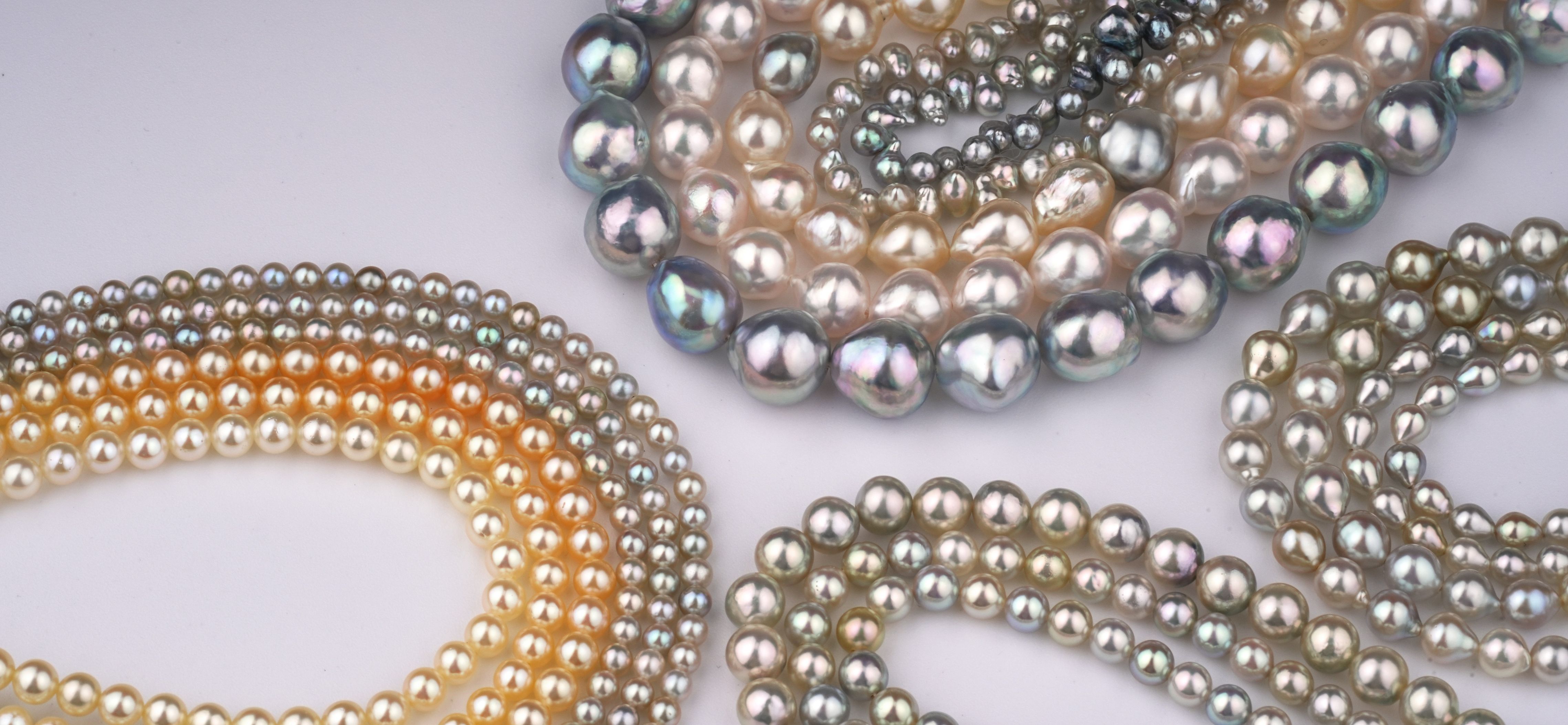
These natural colors should be evaluated within their own category. A natural silver-blue akoya pearl is not less valuable simply because it is not white. Its value depends on the quality of its color, luster, surface, nacre, shape, size, and matching. Large blues with exceptional colors often command premium pricing.
Overtone
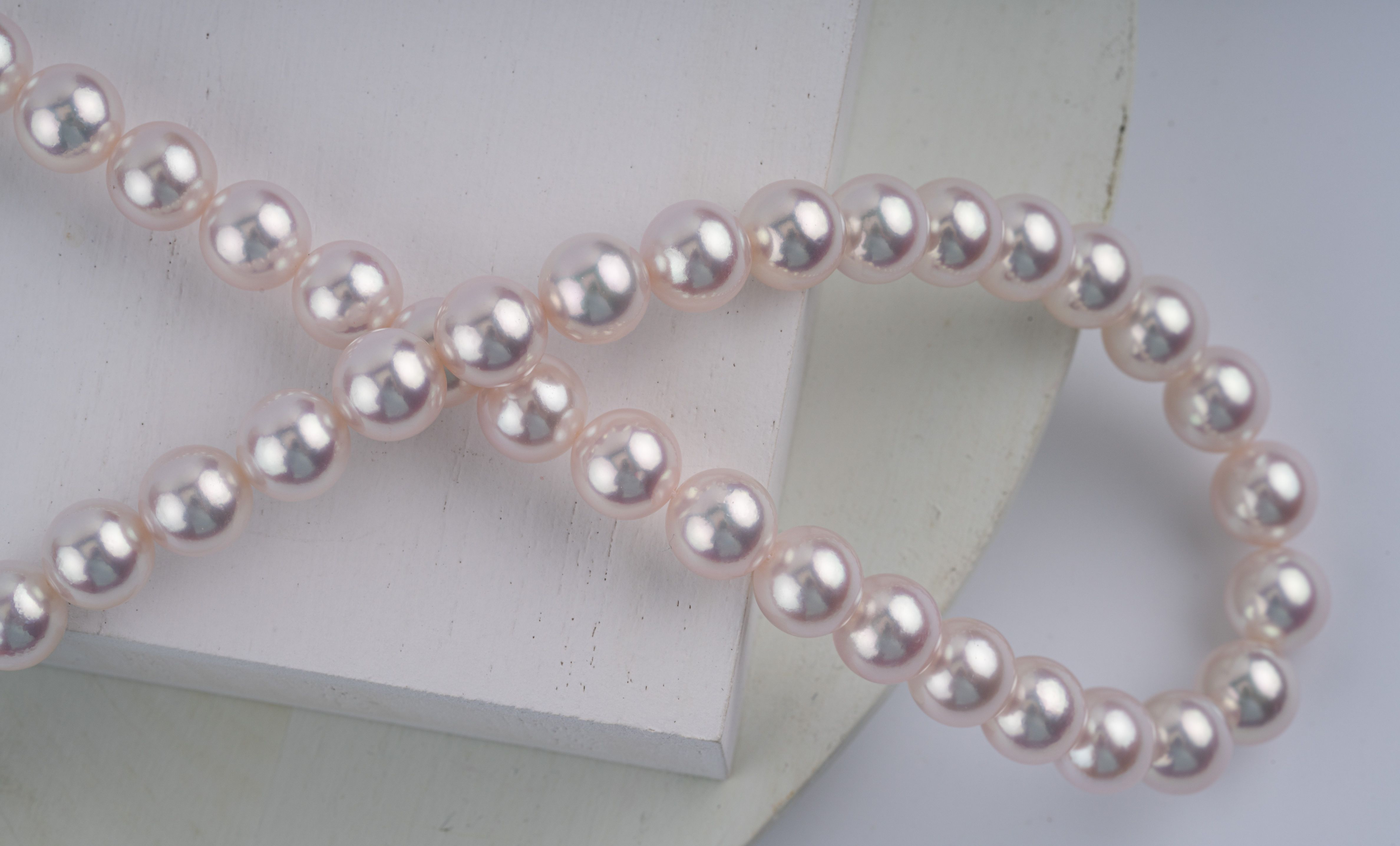
Overtone is the secondary color effect seen over the bodycolor. In classic white and cream akoya pearls, common overtones include rosé, silver, cream, and greenish tones.
Rosé overtones can add warmth and depth. Silver overtones can create a cooler, brighter appearance. Cream overtones can soften the overall look. Greenish or uneven overtones are generally less desirable in classic white akoya strands when they make the pearls appear inconsistent, dull, or mismatched.
It's important to note that rosé overtones are often associated with the pinking process.
 Orient
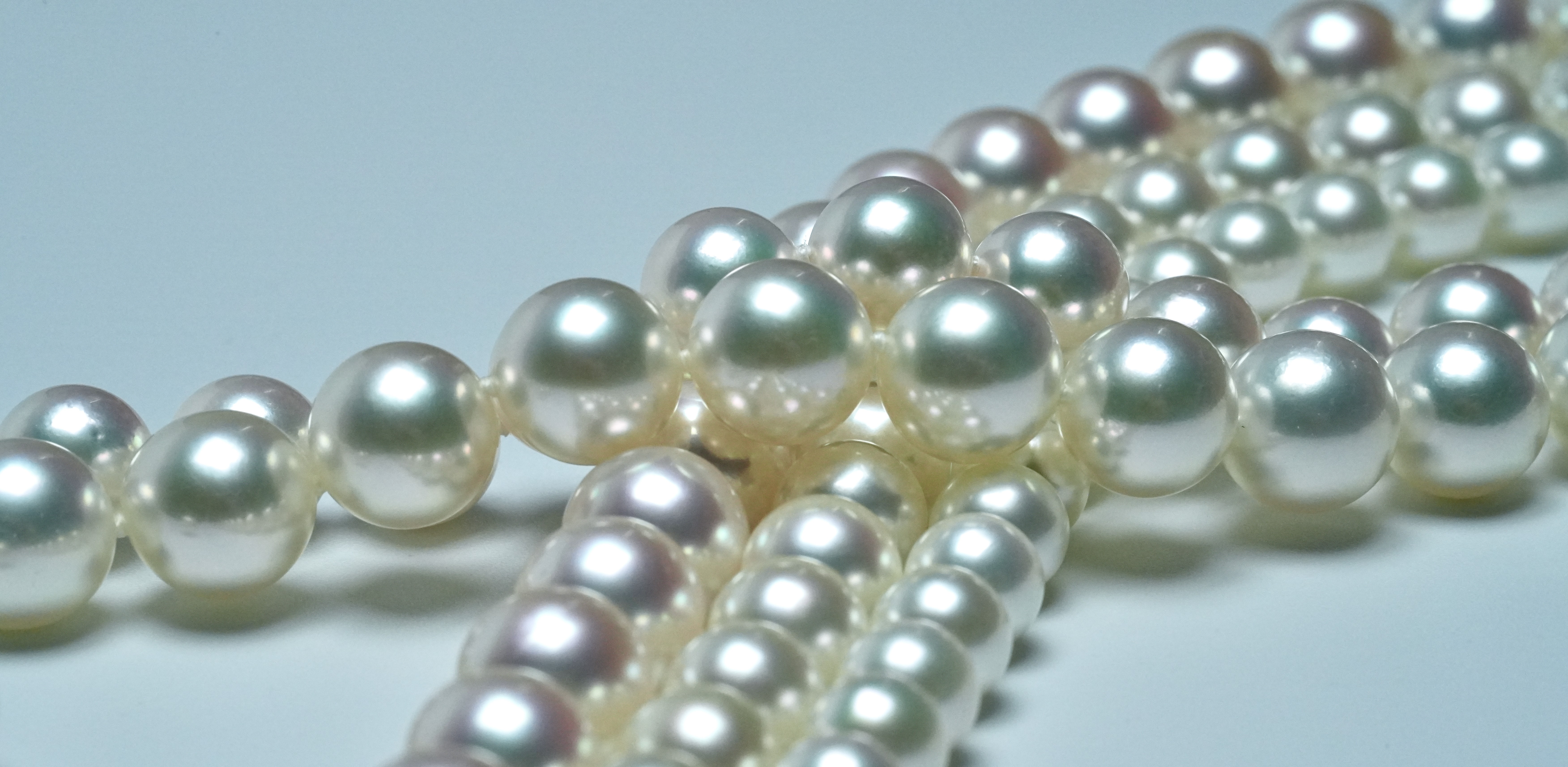
Orient is a rare iridescent play of color associated with exceptional nacre structure. It may appear as shifting color on or just beneath the surface of the pearl. Orient is not present in all fine akoya pearls, but when it appears together with strong luster and good surface quality, it can add beauty and value.
Some Japanese trade or certificate language may use terms such as “aurora” when describing exceptional optical effects. For retail evaluation, it is still best to explain the appearance through bodycolor, overtone, luster, orient, and nacre quality.
Natural Color Akoya Pearls
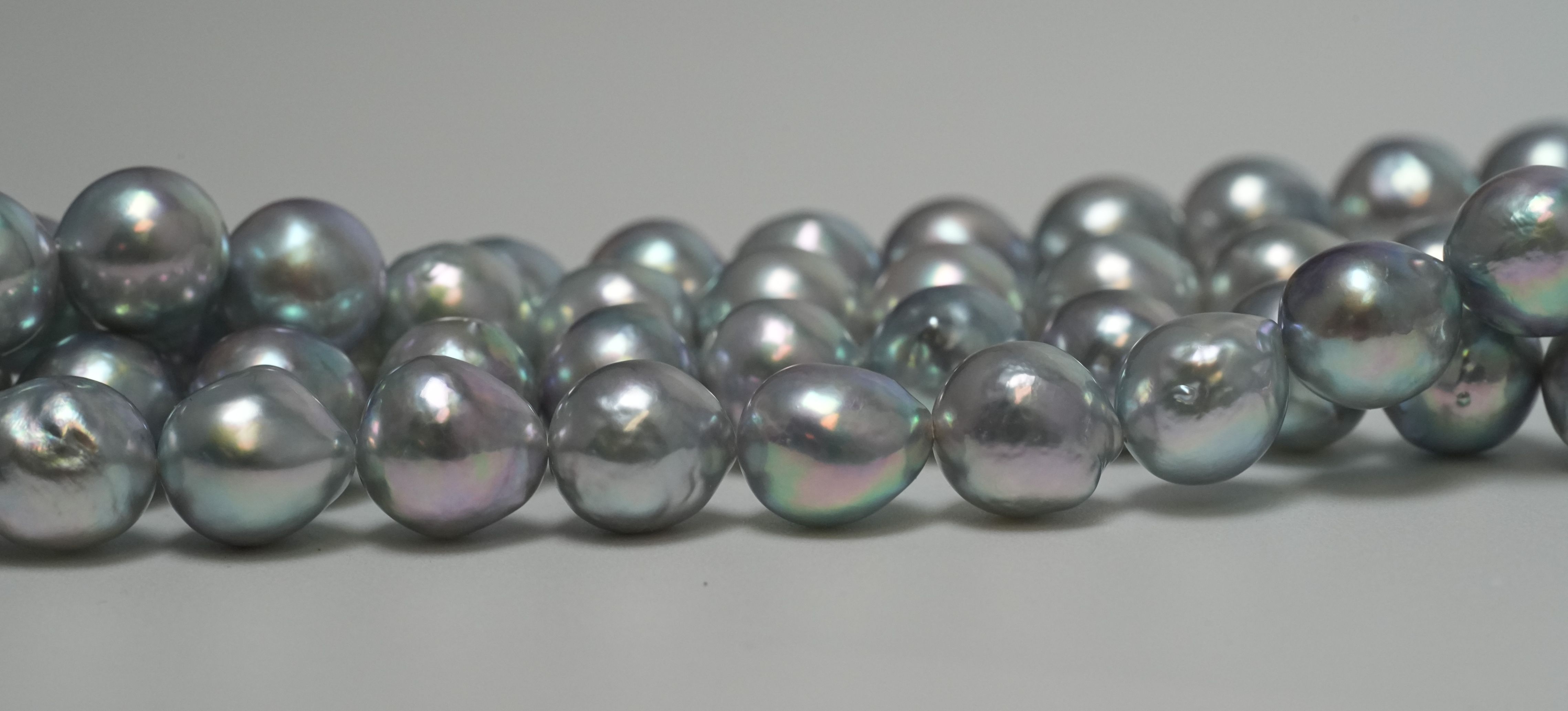
Natural-color akoya pearls should be separated from classic processed white akoya pearls and from treated-color akoya pearls. Natural silver, blue, and silver-blue akoya pearls can be rare and valuable when they display attractive color, strong luster, clean surface quality, good nacre quality, and good matching.
In many natural blue or silver-blue akoya pearls, the blue appearance is not caused by blue nacre. It is often the result of darker material beneath the nacre showing through the translucent nacre layer. This can create a blue, gray-blue, or silver-blue appearance.
Treated Color Akoya Pearls
Treated-color akoya pearls should be clearly identified and disclosed. Black akoya pearls are color-treated, usually through dyeing, to create a dark appearance not naturally produced by akoya mollusks.
Some blue akoya pearls may also be treated. Cobalt-60 radiation treatment can darken the freshwater mussel-shell bead nucleus, causing the pearl to appear blue through the nacre. In this case, the nacre itself has not turned blue. The darkened nucleus is showing through the nacre.
Color and Value
There is no single akoya color that is always the most valuable in every context. In traditional white akoya jewelry, clean white bodycolor with attractive rosé or silver overtone is highly desirable. In natural-color akoya pearls, rare silver-blue or blue colors may command strong premiums when supported by luster, surface quality, nacre quality, size, shape, and matching.
The best color is not simply the whitest color. It is the color that is attractive, properly disclosed, consistent, and well supported by the other value factors.
13 comments